
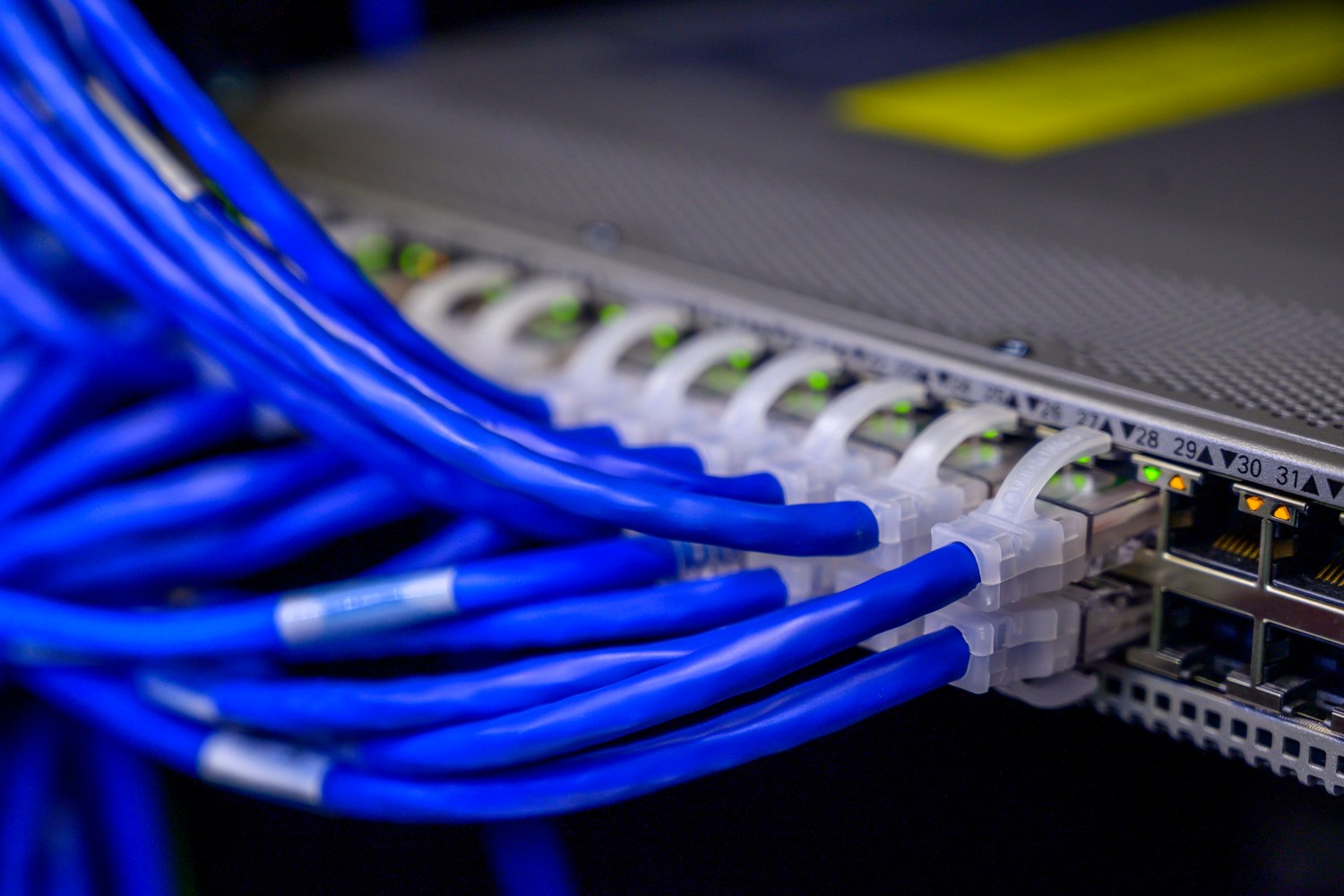
Fiber Optic Installation for Business Networks
Fiber covers what copper can't: runs longer than 100 meters, links between buildings, and backbones between wiring closets. Chain plans, pulls, splices, terminates and tests fiber for offices, warehouses, stores, restaurants and multi-building sites across the Mid-Atlantic. We also install the network on it, so fiber, optics and switches are one job. See structured cabling and networking and WiFi.
- Licensed and insured
- In-house fusion splicing
- Loss testing on every fiber strand
- Certification-tested copper cabling
- Serving MD, VA, DC, DE, PA and NJ
What We Install
- Building-to-building and campus fiber (conduit or aerial)
- Backbone and riser fiber from the main equipment room to each closet
- Single-mode and multimode, sized with spare strands
- In-house fusion splicing and pigtail termination
- Rack- and wall-mount enclosures, splice trays and adapter panels
- Repair of cut, crushed or damaged fiber
- SFP modules and switch uplinks matched to the fiber
- Loss testing on every strand
Fiber Between Buildings
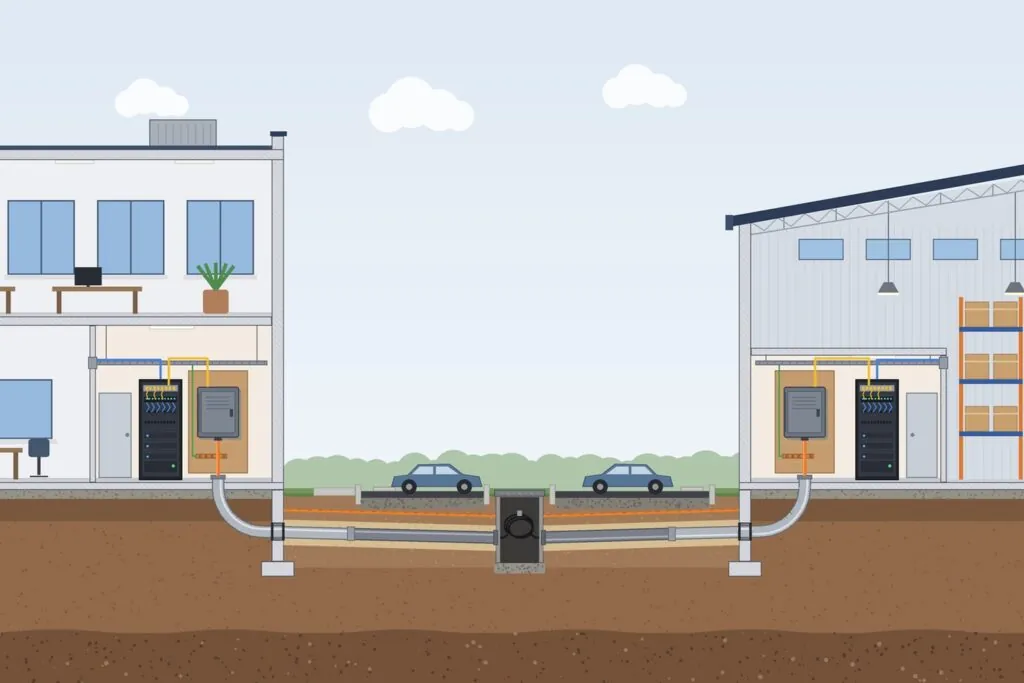
Copper between buildings can carry ground differences and surges. All-dielectric fiber carries light, not current, and covers the distance cleanly. We check existing conduit, the path, entry points and outdoor vs indoor cable rules. New underground work starts with an 811 locate. See running fiber between buildings.
Backbone and Riser Fiber
In larger buildings, fiber links the main equipment room to closets on other floors or far ends. We use the right fire rating for the space (riser or plenum), then route, support and label every run so the next change starts from a record.
Single-Mode or Multimode?
- Multimode (OM3/OM4): fits short indoor runs; 10 Gb/s about 300 to 400 m depending on type.
- Single-mode (OS2): kilometers of reach; the usual choice between buildings and for later upgrades.
Many sites use both. Optics must match the fiber type, so we settle that before ordering. See single-mode vs multimode fiber.
Fusion Splicing, Termination and Enclosures
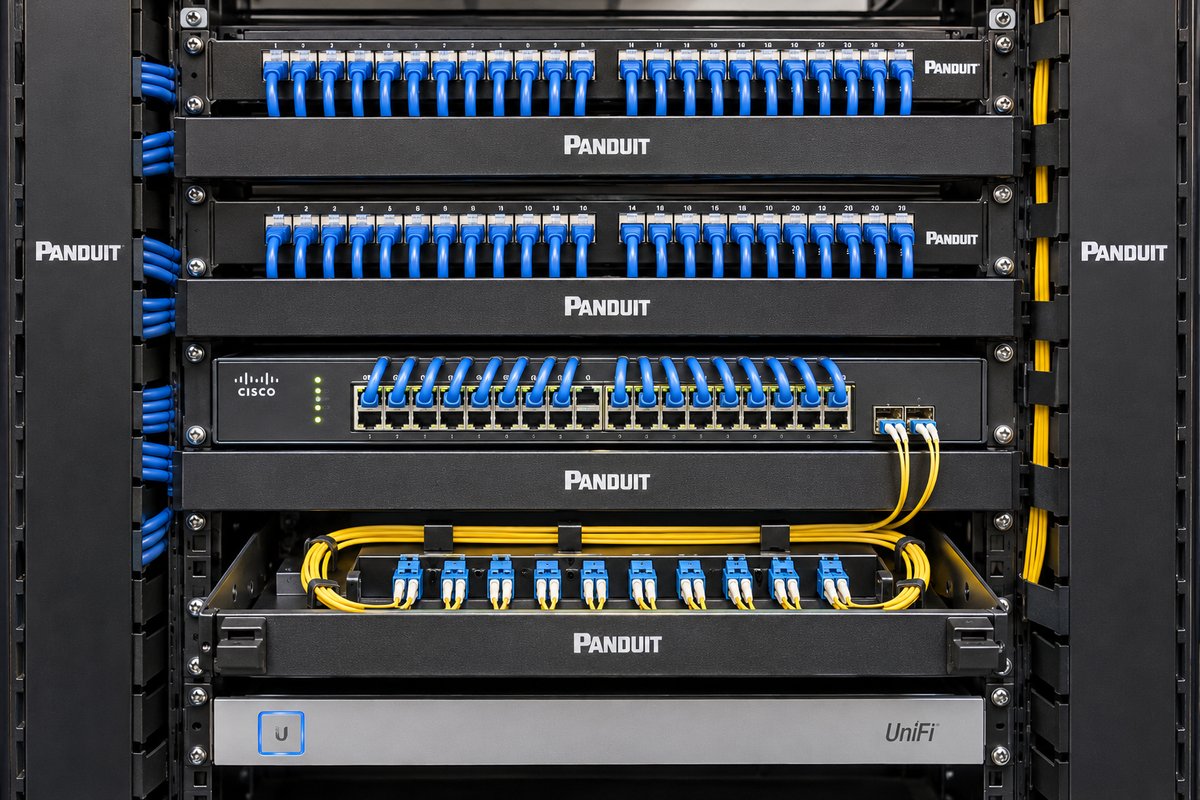
We fuse each strand to a factory-polished pigtail and protect the splice in a tray. Enclosures are labeled by strand and destination, with slack stored and bend radius respected. LC is common; we match your gear. See fiber fusion splicing and fusion splicing vs pre-terminated fiber.
Fiber Repair
We test to find which strands are down, inspect enclosures and patch cords, and walk the route. Fixes range from cleaning connectors to re-termination or splicing in new cable. Repaired strands are retested before the link goes back up. See fiber optic repair.
SFP Modules and Switch Uplinks
Each end needs an optic that matches fiber type, wavelength and speed, and a switch port that accepts it. We check both ends before cutover. See SFP modules and fiber uplinks.
How We Test Fiber
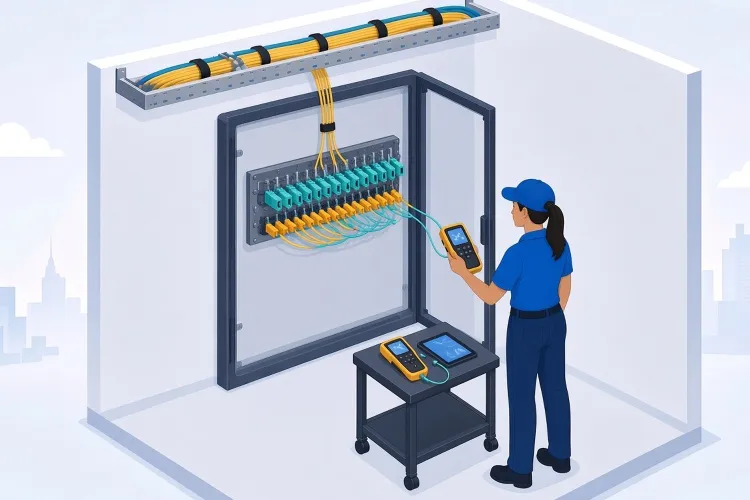
Every strand we install or repair gets an insertion loss test (850/1300 nm multimode; 1310/1550 nm single-mode) against a loss budget for that link. At handoff you get results by strand, matching labels, and a strand map.
Where We Install Fiber
Maryland, Virginia, Washington, DC, Delaware, Pennsylvania and New Jersey. We plan around each state's dig-locate rules. See the full service area.
Fiber Optic Installation FAQ
Can you add to or repair fiber another contractor installed?
Yes. We test what's there, identify strands, then splice, re-terminate or extend. Missing records get rebuilt as we go.
Do we need new switches?
Not always. SFP ports may only need the right optics; otherwise a media converter or fiber-capable switch. We'll say which once we see the gear.
Is a wireless bridge good enough between buildings?
Sometimes for a short clear hop. Fiber is the more stable long-term link when a cable path exists.
Planning a Fiber Run?
Tell us where the fiber needs to go, whether that's between buildings, up a riser or out to one closet, and we'll put together a quote.
Request a Quote