
Fusion splicing vs pre-terminated fiber is a choice every fiber project makes, whether anyone says it out loud or not. Once the cable is pulled, each strand has to end in a connector that plugs into a patch panel and, from there, into a switch. You can build those ends in the field by fusing factory-made pigtails onto the cable, or you can buy the cable with connectors already on it, cut to length and tested at the factory. Both methods work well. They just suit different buildings, schedules and routes.
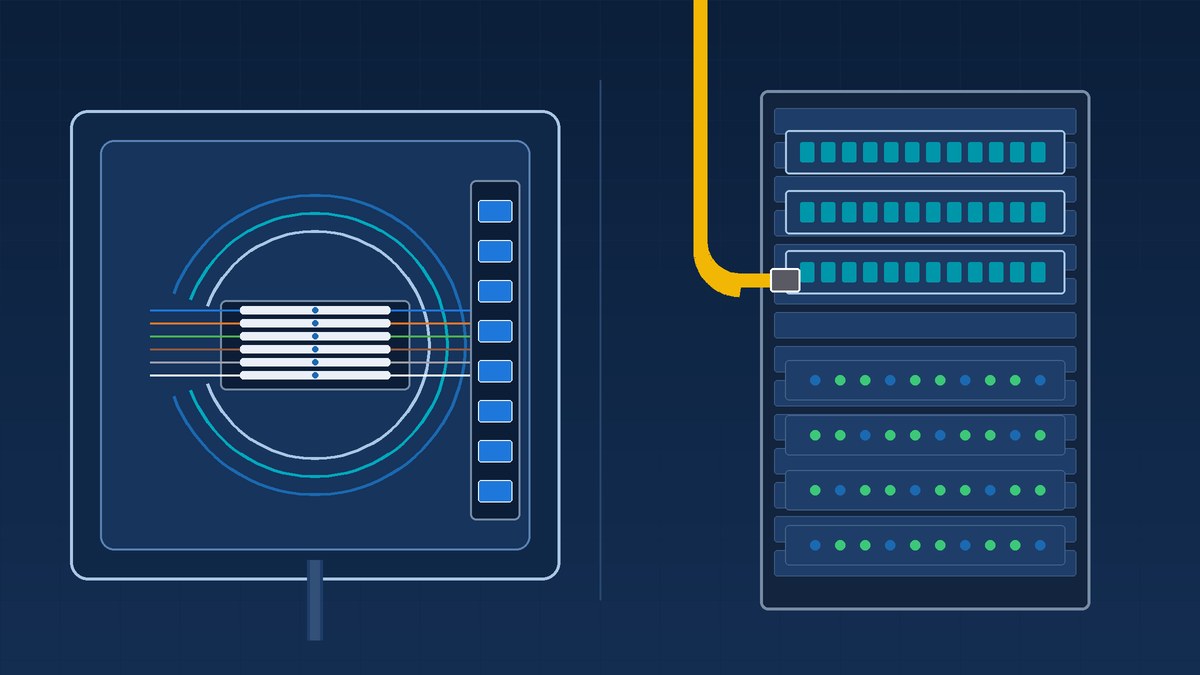
This guide explains how each method works, where each one fits, and the questions to ask before your fiber backbone is ordered. If you are still deciding between fiber and copper for the backbone itself, start with our Cat6 vs fiber backbone guide.
How Fusion Splicing Works
A fusion splicer joins two glass fibers end to end with an electric arc. The technician strips the coating from each fiber, cleans it, cleaves it so the end is flat, and loads both fibers into the splicer. The machine aligns the cores and fuses them into one continuous strand. A heat-shrink sleeve then protects the joint, and the splice is stored in a splice tray inside a panel or enclosure.
In a typical building job, the strands in the pulled cable are fused to short factory-made pigtails. Each pigtail already has a polished connector on one end, so you get a factory-quality connector and a permanent field joint. This is the most common way to terminate fiber in the field today.
A good fusion splice adds very little loss. Fluke Networks notes that a properly made splice can measure under 0.1 dB, while a mated connector pair usually adds 0.2 dB or more. The TIA-568.3 standard allows up to 0.3 dB per splice and 0.75 dB per mated connector pair when building a loss budget, so a well-made splice uses only a small part of its allowance.
What field splicing needs
- A trained technician and a fusion splicer, cleaver and cleaning supplies.
- A clean, steady work area at each end of the cable, usually at the patch panel or splice enclosure.
- Splice trays and enough room in the panel to store slack fiber without tight bends.
- Time. Every strand is prepared, fused and protected one at a time.
How Pre-Terminated Fiber Works
Pre-terminated fiber, also called pre-connectorized or factory-terminated fiber, arrives with connectors already installed on both ends. The cable is built to a set length, and the factory polishes, inspects and tests each connector before it ships. High-count backbone trunks often use MPO connectors, which carry many fibers in one plug, and snap into cassettes that break out to LC ports. Lower counts may come with LC connectors on a fanout.
The connectors travel through the pathway inside a pulling grip or protective sock. At the far end, the installer removes the protection and plugs the cable into the panel or cassette. There is no splicing on site.
What pre-terminated fiber needs
- Accurate lengths before ordering. A trunk that is too short has to be reordered. One that is too long leaves slack that must be stored neatly.
- Lead time. Assemblies are often made to order, so they need to be ordered well before the install date.
- A pathway large enough for the connector end and its pulling grip, not just the cable.
- Care during the pull. A connector damaged in the conduit is hard to fix in the field.
Fusion Splicing vs Pre-Terminated Fiber: Side by Side
| Factor | Fusion splicing (spliced pigtails) | Pre-terminated fiber |
|---|---|---|
| Lengths | Cut on site to the exact route | Must be measured and ordered in advance |
| Lead time | Bulk cable and pigtails are usually stocked | Often built to order |
| Install time on site | Longer; each strand is spliced | Shorter; plug in and go |
| Pathway size | Bare cable pulls through tight conduit | Needs room for connectors and grip |
| Skill on site | Trained splicing technician required | Careful pulling and handling |
| Outdoor-to-indoor transitions | Natural fit at the entrance | Less common for outside plant runs |
| Repairs | Same method used to fix a cut strand | Damaged ends often need splicing anyway |
When Fusion Splicing Is the Better Fit
Existing buildings and crowded pathways
Older buildings rarely have empty conduit. Risers and sleeves are often half full of abandoned cable, and the open space may not pass a connector and pulling grip. Bare cable pulls through more easily, and you splice once it is in place. Firestopped penetrations raise the same issue: a smaller opening around bare cable is easier to seal properly.
Runs between buildings
Outside plant cable is built for conduit that may hold water or see temperature swings. Where it enters a building, it is common to splice it to indoor pigtails in an enclosure near the entrance. Fluke describes fusion splicing as the preferred way to join 250-micron outside plant fiber to 900-micron indoor fiber. Our guide to running fiber between buildings covers the route, cable types and code rules for that kind of link.
Uncertain lengths or changing plans
If the exact route is not settled until the ceiling is open, or the network room might move, field splicing removes the risk of a cable that does not fit. You cut to the real distance, not the planned one.
Low strand counts
For a 6- or 12-strand backbone between two closets, the time saved by factory connectors is small, and splicing keeps the project from waiting on a custom assembly.
Repairs and additions
When a fiber is cut by another trade or damaged in a ceiling, fusion splicing is how it gets restored. A crew that splices in-house can add strands, move a panel or fix a break without ordering parts and coming back.
When Pre-Terminated Fiber Is the Better Fit
New construction with known distances
When drawings are final and pathways are open, lengths can be measured with confidence. Pre-terminated trunks then install quickly and keep the fiber crew’s time on site short.
High strand counts in one room
Data rooms and server rooms with dozens of strands between racks are where MPO trunks and cassettes save the most time. Factory terminations also keep results consistent across every port.
Tight schedules
If the building opens on a fixed date and the fiber window is short, plug-in assemblies reduce the work that has to happen on site, provided they were ordered early enough.
The Hybrid Approach Most Buildings End Up With
Many projects settle fusion splicing vs pre-terminated fiber by using both methods. A common pattern is pre-terminated trunks inside the main data room, where distances are short and known, and spliced pigtails for the backbone runs to each closet and for any outside plant cable coming in from another building. Choosing per run, not per project, usually gives the best mix of speed and fit.
Whatever the mix, the fiber type has to match end to end. Single-mode pigtails go on single-mode cable, and multimode grades should not be mixed. If you are still choosing between the two, see singlemode vs multimode fiber.
Testing Is the Same Either Way
Factory testing on a pre-terminated assembly checks the cable before it ships. It does not check the cable after it has been pulled through a building. Pulls can stress fiber, and a connector can pick up dirt or damage on the way. Every installed strand should be loss tested after installation, whichever method was used.
Chain loss tests every fiber strand after installation. You should get results for every strand, labeled to match the panel, so the next technician knows exactly what is in the wall. Our commercial fiber installation guide walks through the full project from survey to handoff.
Questions to Ask Before You Choose
- How sure are we of each run’s length, and when will we know for certain?
- Do the pathways have room for connector ends, or only for bare cable?
- How many strands are on each run, and how many will be terminated now?
- Does any run start outdoors or in another building?
- What is the lead time on assemblies, and does it fit the schedule?
- Who will handle repairs and additions after the job is done?
- Will we get loss test results for every strand, labeled to match the panels?
FAQ: Fusion Splicing vs Pre-Terminated Fiber
Is fusion splicing better than pre-terminated fiber?
Neither is better everywhere. Fusion splicing fits retrofits, tight pathways, outdoor-to-indoor transitions, low strand counts and repairs. Pre-terminated fiber fits new construction with known lengths, high strand counts and short install windows. Many buildings use both.
Does a fusion splice slow down the network?
No. A splice adds a small amount of optical loss, often under 0.1 dB when it is made well, and it does not change the speed of the link. What matters is that the total loss of the link stays within the budget for the optics you plan to use.
Can pre-terminated fiber be repaired if it is damaged?
Yes, usually by splicing. A damaged connector or a cut in the cable is typically repaired by fusion splicing a new pigtail or a short section of cable. That is one reason it helps to work with an installer who splices in-house.
Do pre-terminated cables still need to be tested after installation?
Yes. The factory test report shows the assembly was good when it shipped. Testing after installation confirms it survived the pull and that every connection in the finished link is clean and within budget.
Which is faster to install?
On site, pre-terminated fiber is faster because there is no splicing. Overall, it depends. If the assemblies have a long lead time or a length turns out wrong, field splicing with stocked materials can finish sooner.
Plan Your Fiber Termination with Chain
Chain installs fiber backbones for businesses across Maryland, Virginia, DC, Delaware, Pennsylvania and New Jersey, and we handle fusion splicing in-house, so we can recommend spliced, pre-terminated or a mix of both based on your building instead of a single habit. We are licensed and insured, we loss test every fiber strand, and we connect the fiber to the switches and WiFi it serves. See our fiber optic installation and splicing services, our structured cabling work and business networking and WiFi, or check our Mid-Atlantic service area. When you are ready, contact us to plan your fiber project.