
Business Networks and WiFi for Maryland Sites
Chain designs, installs and services business networks for offices, stores, restaurants, warehouses and multi-site operators across Maryland and the Mid-Atlantic. One crew handles the firewall and internet edge, the switches, the fiber and copper between closets, and the access points.
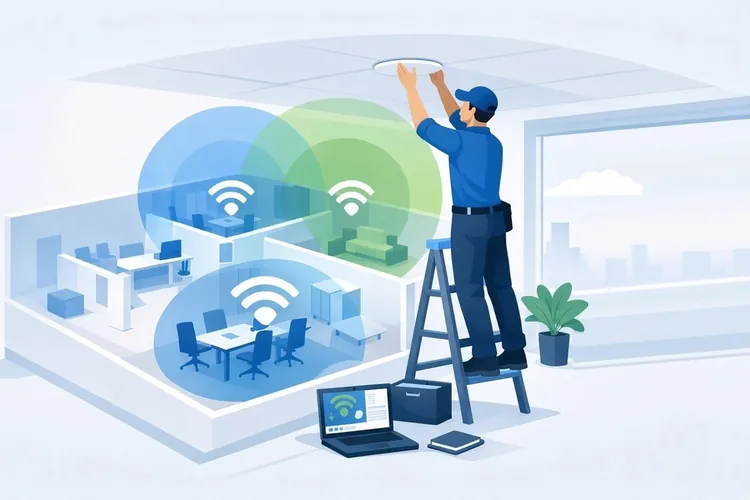
Wireless Access Point Installation
Most WiFi trouble comes from placement, power and the network behind the radios. We start with a WiFi site survey: floor plan, walls and shelving, devices in each area, and the closet each cable must reach.
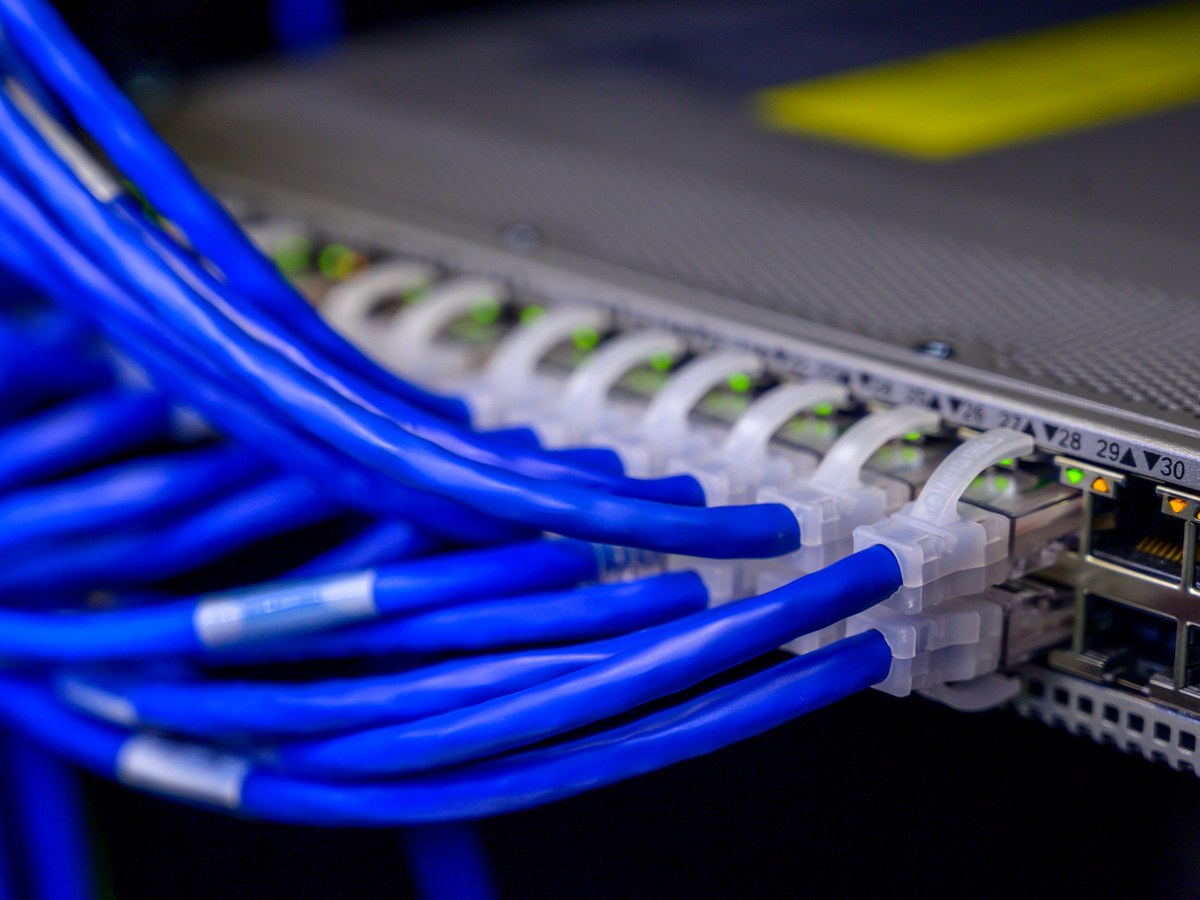
Access points go where people and devices work. Registers, kitchens, conference rooms and stockrooms each need different coverage (see capacity planning and access point placement). Every access point gets its own tested, labeled cable run and PoE power from a switch sized for the radios, cameras and phones on that rack. See PoE vs non-PoE switches.
- Ceiling, wall, enclosure and outdoor mounts as the space needs
- Separate guest, staff, register and camera networks when required
Enterprise Wireless for Larger Sites
Multi-floor buildings and campuses need centrally managed WiFi so devices roam cleanly. Separate SSIDs and VLANs keep guest traffic off registers and cameras (see restaurant network setup). For multi-site operators we document one standard for names, VLANs, labels and AP layout, then repeat it at each location.
Warehouses and Large Floors
Metal racking, changing stock and roaming scanners need aisle-by-aisle coverage. Coolers and metal rooms often get their own access point. Runs past Ethernet's 100-meter limit get a small closet with a fiber link we splice and loss-test in-house. See warehouse network cabling.
Where We Install
Maryland is home base: Baltimore, Rockville, Montgomery County, Annapolis, Columbia, Frederick and Prince George's County, plus Washington, DC, Northern Virginia and the rest of our Mid-Atlantic service area. See Maryland, Washington, DC, Virginia, Delaware, Pennsylvania, New Jersey and the full service area.
Switches, Firewalls and Internet Failover
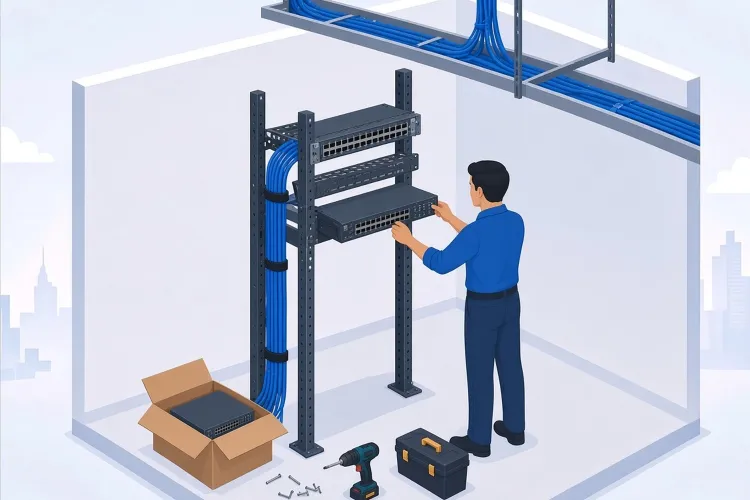
We set up the firewall at the edge, configure the switches, and build a rack that stays serviceable.
- Network design for new sites, remodels and expansions
- Separate networks for registers, cameras and guest WiFi
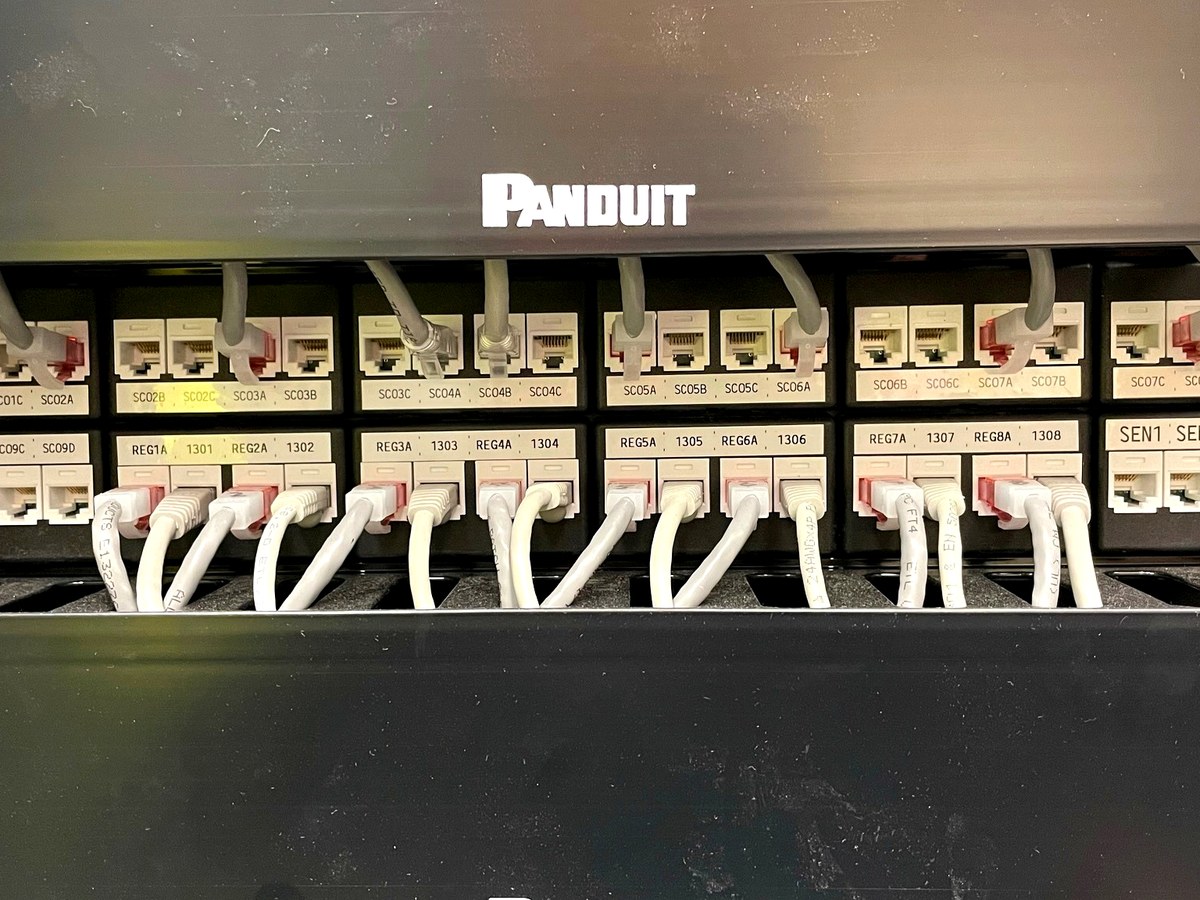
- Racks, patch panels, labeling and as-built notes
- On-site troubleshooting for dropped connections, dead spots and slow links
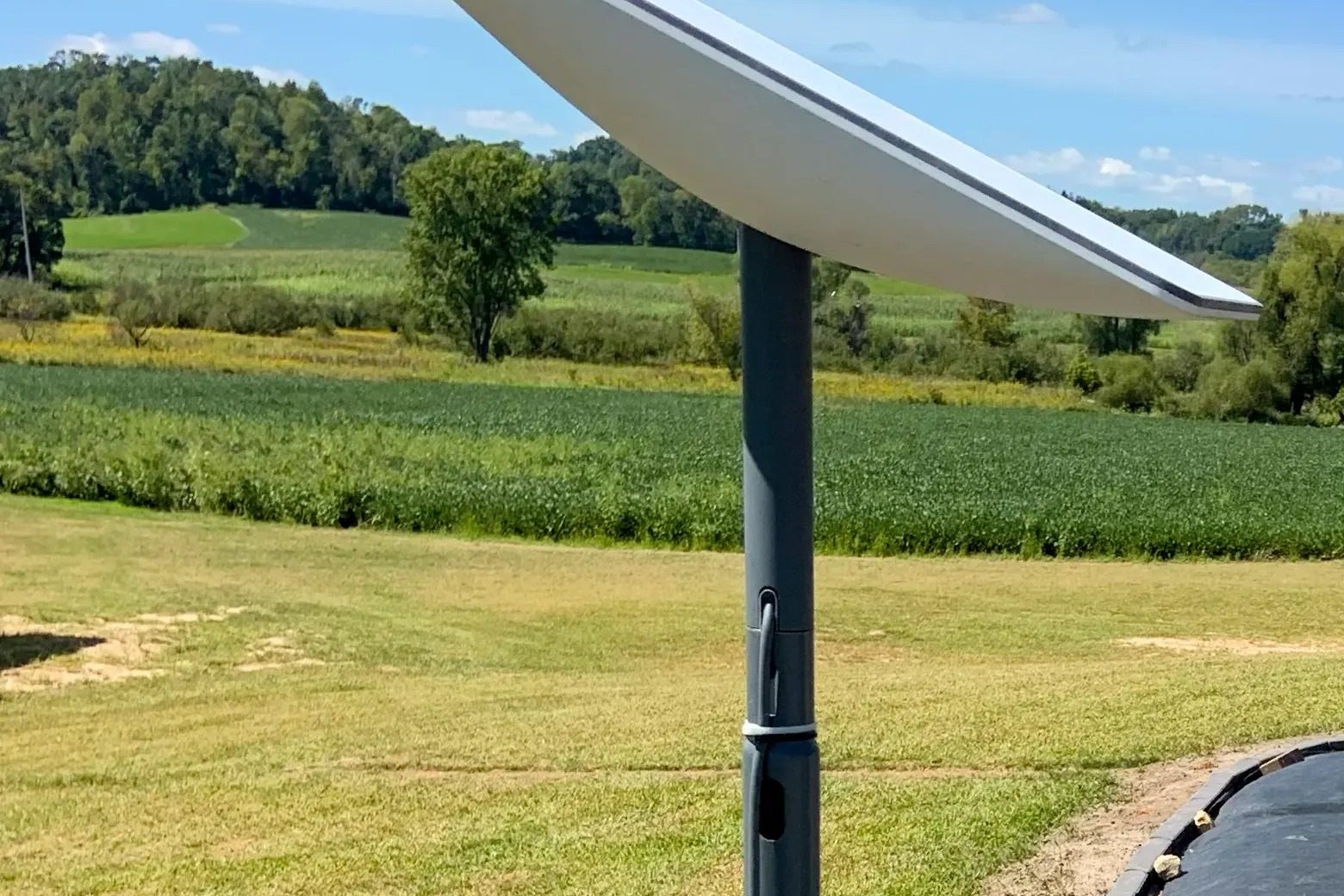
A backup internet line takes over when the primary fails. Commercial Starlink works well as that second line, or as the main connection where cable or fiber is weak. We place the dish for clear sky, run weatherproof cable, and set automatic switchover. See Starlink backup internet for business and the network redundancy planning guide.
Built on a Fiber Backbone
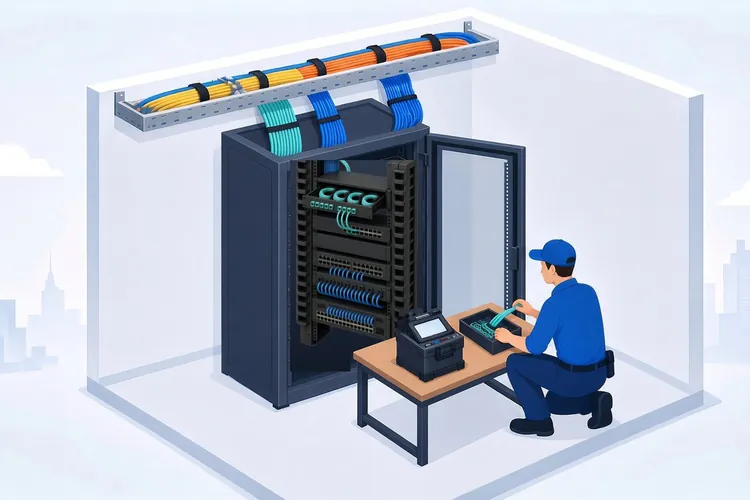
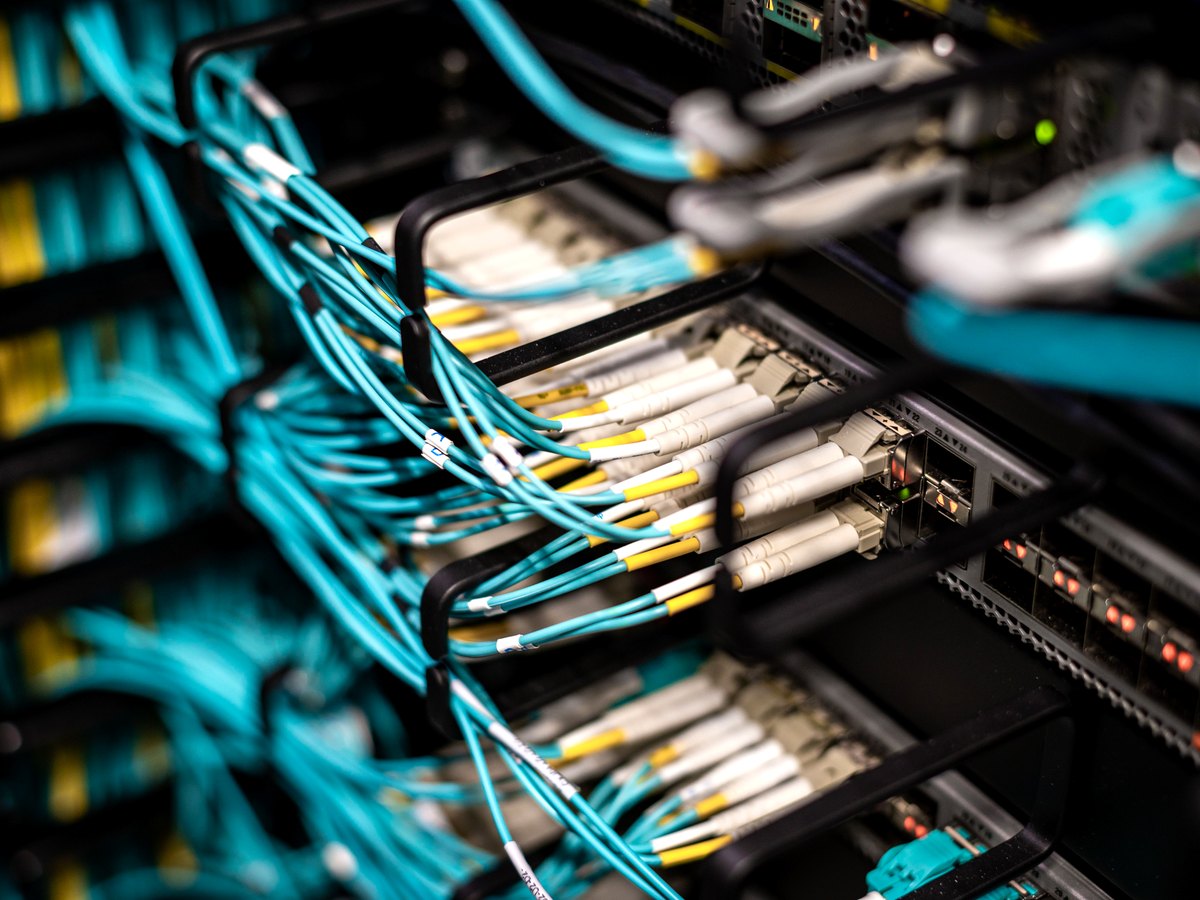
We run single-mode or multimode fiber between the main equipment room and each wiring closet, and between buildings. Every strand is fusion-spliced and loss-tested. Certification-tested Cat6 handles the last run to each access point, camera and register. See structured cabling, fiber optics and network closets and racks.
How a WiFi Install Works
- Assess and design. Site walk, coverage check, plan and equipment list before order.
- Build the rack. Switches, firewall, patch panels, dressed and labeled.
- Mount the access points. Each one where the design calls for it, cabled to the rack.
- Test and hand off. Walk-test coverage and roaming; adjust; review results with you.

Checked, Documented and Repeatable
At handoff you get an access point map, matching labels, and a settings record (network names, VLANs, switch ports).
Business WiFi and Networking FAQ
Do you install business WiFi in Baltimore?
Yes. Baltimore City and surrounding counties, plus the rest of Maryland.
Do you install WiFi outside Maryland?
Yes. Virginia, Washington, DC, Delaware, Pennsylvania and New Jersey.
Do we need a site survey for a small space?
Not always. One room with a few users may need a single well-placed AP. Survey larger spaces, multi-floor sites, warehouses, coolers, or places WiFi already drops.
Can you reuse our existing cabling or access points?
Often some of it. We test what is there and tell you what can stay.
Can guests on our WiFi see our registers or cameras?
Not when guest WiFi sits on its own VLAN with firewall rules that only allow internet.
We have several locations. Can they all be set up the same way?
Yes. One documented standard, repeated at each site.
What do we get when the install is done?
An access point map, matching labels, and a settings record.